The 2026 budget allocations to Trinidad and Tobago's 14 municipal corporations follow a pattern that requires no statistical analysis to identify. Every PNM-controlled corporation received decreased funding. Every UNC-controlled corporation received increases. The combined shift: PNM constituencies saw a decrease of $32 million in recurring expenditure while UNC constituencies saw an increase of $70 million. In absolute terms, the seven PNM corporations still received $987.29 million against $805.46 million for UNC areas - but that reflects the larger workforces in PNM-held municipalities, which employ 8,220 workers compared to 5,186 in UNC areas. The direction of change is what matters, and it points in exactly one direction.
The government says it is correcting historical imbalances. The opposition says it is political victimisation. The residents of both areas are the ones living with the consequences.
The Sharpest Cuts
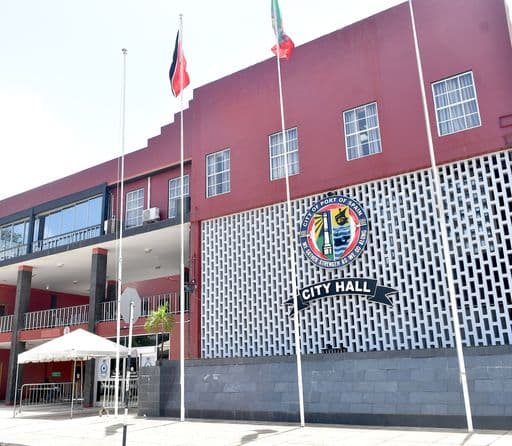
Port of Spain City Corporation's development programme was cut by $15.65 million - a 79% decrease. Mayor Chinua Alleyne warned the city could maintain operations only through February 2026 before facing a garbage crisis. The "other contracted services" line, which covers garbage collection, was reduced from $20.9 million to $13.2 million - a $7.7 million shortfall. Alleyne said the Corporation's Carnival preparations were threatened by the 40% reduction in goods and services. More than 500 day workers who had been cleaning and maintaining communities were eventually sent home, replaced by just 12 workers hired through the Ministry of Rural Development.
Point Fortin Mayor Clyde James provided the most detailed before-and-after breakdown. The borough's total development programme fell from $17.6 million to $5.5 million - a loss of $12.1 million. Within that, the drainage budget dropped from $5 million to $300,000, a 94% cut. The local roads and bridges budget fell from $5 million to $200,000, a 96% cut. Point Fortin has a well-documented flooding problem. The incoming mayor identified serious drainage issues affecting multiple areas of the borough in 2023. Cutting the drainage budget by 94% does not mean Point Fortin will experience 94% less flooding. It means the municipality has 94% less money to prevent it.
Diego Martin Borough Corporation, which has 10 electoral districts, saw its development programme cut from $17.4 million to $11 million - a 36% decrease. San Fernando Corporation received an approximately $4 million cut, prompting Mayor Robert Parris to warn that at least 50 short-term contract workers would lose their jobs after December 31, 2025. The Corporation could not procure basic supplies - "paper, ink, and toilet paper," Parris said. In the end, both PNM and UNC councillors in San Fernando united to ensure no workers were dismissed - a rare moment of bipartisan solidarity in a story defined by its absence.
The Biggest Increases
Chaguanas Borough Corporation, controlled by the UNC, saw its development programme rise from $17.2 million to $37 million - an increase of nearly $20 million, or 116%. Penal/Debe Regional Corporation received an increase of over $21 million, a 122.5% rise. Chairman Gowtam Maharaj said flood mitigation works were planned - an estimated 60% of the Penal/Debe municipality lies within the Oropouche watershed, making the spending defensible on infrastructure grounds. Other UNC corporations received increases ranging from $6 million to $14 million.
The contrast between Chaguanas and Diego Martin is the starkest illustration. Diego Martin has 10 electoral districts to Chaguanas's 8, yet now receives less than one-third of Chaguanas's development allocation. The residents of Diego Martin did not move. Their infrastructure needs did not decrease. The only thing that changed was the political alignment of their municipal council relative to the national government.
The Government's Defence
Minister of Rural Development and Local Government Khadija Ameen pointed to historical per-capita disparities. Under previous allocations, Port of Spain received approximately $6,000 per person per year while Tunapuna, Princess Town, Penal/Debe, and Couva received approximately $700 per person per year. Ameen described the existing system as "unfair and outdated."
The per-capita argument has merit. Urban PNM-held areas historically received disproportionately large allocations relative to their populations. If the 2026 budget is genuinely rebalancing toward per-capita equity, the government could demonstrate that by publishing the formula - showing precisely how population, land area, infrastructure age, and maintenance needs were weighted. No such formula has been published.
Prime Minister Persad-Bissessar went further. In January 2026, she declared the $2.1 billion allocated to local government "more than enough" and said PNM corporations would not receive "a cent more" unless taxpayers see improvement. She criticised workforce productivity across all corporations, noting that 13,406 local government employees cost taxpayers $2.1 billion annually. She described an "attendance-book-and-go-home culture" as "entrenched policy across all corporations."
The PM's response to complaints from PNM-controlled areas was to say they "should stop suskaying" - a Trinbagonian expression meaning to stop sulking or whining. She also posted on X that most murder victims were "young afro adults and teenagers" concentrated in "Afro-dominated communities within PNM strongholds" - framing crime data in explicitly racial and partisan terms. The remark ties the funding pattern to a broader narrative: that PNM areas are dangerous, and that their elected representatives bear responsibility for the violence. Whether intentional or not, it provides a justification for the spending disparity that maps neatly onto ethnic and political lines.
What It Looks Like on the Ground
Municipal corporations deliver the services that affect daily life most directly: garbage collection, road maintenance, drain clearing, street lighting, market maintenance. These are not abstract budget lines. They determine whether your street floods, whether your garbage is collected, and whether the road to your house has potholes or pavement.
The drainage connection is particularly pointed. In June 2025, heavy rainfall of 75 to 200 millimetres caused widespread flooding across Trinidad, particularly in the south - Penal, Debe, Barrackpore, Siparia - where floodwaters reached 1 to 1.5 metres inside homes. The UNC-controlled Penal/Debe corporation received a 122.5% funding increase for drainage and mitigation. Point Fortin, PNM-controlled and also flood-prone, saw its drainage budget cut by 94%. The flooding does not know which party controls the borough. The money does.
PNM official Symon de Nobriga called the pattern "a clear case of geographic and political victimisation." The opposition described it as "a concerted effort to starve PNM corporations to ensure they can't deliver on their mandate" ahead of local government elections.
The Structural Problem
Partisan municipal funding is not new in Trinidad and Tobago. Both the PNM and the UNC have been accused of it when in power. What makes the 2026 allocations notable is the scale - a 79% cut to the capital city, a 96% cut to a borough's roads budget - and the uniformity of the pattern. Every PNM area cut. Every UNC area increased. No exceptions.
The deeper problem is structural. Municipal corporations do not control their own income. They cannot raise revenue, introduce fees, or borrow for capital works. Local government funding has remained stagnant at approximately $1.5 billion for recurrent expenses between 2020 and 2025. Reform has been discussed since 1959. The Local Government Reform Bill of 2019 attempted to give corporations authority over property taxes and fees. Over 1.1 million contributions were made to the reform consultation process, including 32,000 in person. The reform has not been enacted.
Until corporations have independent revenue authority, they remain entirely dependent on central government allocations - which means they remain entirely vulnerable to whichever party holds national power. The solution is not asking one party to be fair to the other's areas. The solution is a system where fairness is not optional.
If the Office of Procurement Regulation is auditing spending in the suddenly well-funded UNC corporations to ensure the increased allocations are being spent appropriately, it has not said so. If the government has published the criteria used to determine the allocation pattern, it has not been found in public reporting. The residents of Port of Spain, Point Fortin, Diego Martin, and San Fernando are not suskaying. They are experiencing measurably reduced public services because their elected municipal representatives belong to the wrong party.
Sources
- Trinidad Guardian: "PNM corporations see funding cuts while allocations in UNC areas rise" (October 2025)
- Trinidad Guardian: "Mayor warns of garbage crisis in Port of Spain after budget cuts" (October 2025)
- Trinidad Guardian: "500 PoS workers sent home; mayor warns of sanitation crisis" (2026)
- Trinidad Guardian: "PNM-led corporation to send home workers after budget cuts" (2025)
- Trinidad Guardian: "PM demands results from regional corporations before next budget" (January 2026)
- Trinidad Express: "Mayors decry 'drastic' drop in allocations to PNM-led councils" (October 2025)
- Trinidad Express: "Systemic bias disguised as budget strategy?" (Letters, 2025)
- Trinidad Express: "$20M cut threatens Carnival in the Capital" (2025)
- Trinidad Express: "No more money for corporations" (January 2026)
- Trinidad Express: "The case for local govt revenue powers" (2025)
- Newsday: "PNM: Budget betrays people's trust" (October 2025)
- Newsday: "Unlock local government's reach" (November 2025)
- Newsday: "Flash flooding in Penal - corporation says mitigation works coming" (November 2025)
- Details of Estimates of Recurrent Expenditure, Budget 2026
- IDB: "Study of Municipal Finance: The Case of Local Government in Trinidad and Tobago"
- Ministry of Rural Development and Local Government: Budget Guide 2026