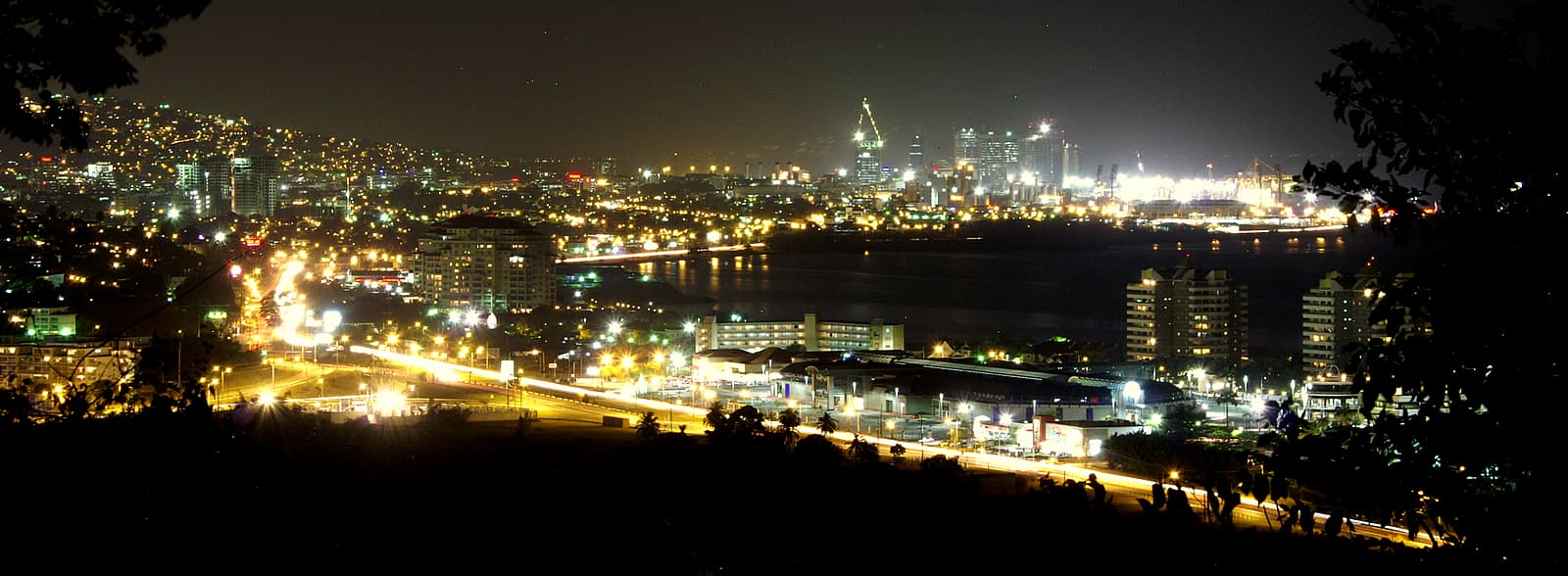
Hilton International is preparing to withdraw its brand from the state-owned Hilton Trinidad and Conference Centre, the 64-year-old landmark on Lady Young Road that has been Port of Spain's flagship hotel since the country's independence. The hotel will lose its international flag - the brand affiliation, reservation system, loyalty programme membership, and quality standards that distinguish a Hilton from an unbranded property.
The property was built between 1960 and 1962 as the world's first "upside-down" hotel, designed to fit into a hillside without disturbing the mountain. Barack Obama stayed during the Fifth Summit of the Americas in 2009. King Charles and Camilla visited in 2008. Nelson Mandela was a guest in 2004. Now the state-owned asset that has hosted world leaders for six decades is losing its brand because the Government of Trinidad and Tobago could not organise a refurbishment.
The Money That Disappeared
The fiscal trail tells the story more clearly than any political statement. In the 2025 budget, $163.6 million was allocated for the Hilton Property Improvement Plan. In the revised estimates, that figure was slashed to $3.6 million - enough for landslip restoration only. The 2026 budget allocated just $10 million. To date, $47.11 million has been spent on implementation of the PIP. The wider transformation programme never proceeded.
UDeCOTT, the state project management company, issued a Request for Proposals for the hotel's refurbishment in August 2023. The RFP outlined serious work: structural repairs, reinforced concrete rehabilitation, steel replacement, foundation work, drainage infrastructure, roof replacement, and roadworks. That was nearly three years ago. No substantive refurbishment began. The only work completed was roof repairs and landslide stabilisation. The renovation timeline slipped from July to September to December to March and beyond.
The scale of the required investment is itself disputed. Early Guardian reporting cited US$600,000 in required capital upgrades. Former Prime Minister Rowley states the real figure is approximately US$600 million. Subsequent coverage described a $400 million renovation package. An earlier renovation project saw costs escalate from $484 million to $634 million. The discrepancies likely reflect different scopes - from immediate brand-compliance fixes to comprehensive structural renewal of a building that is now 64 years old. Regardless of which figure is accurate, none of the work was done.
The Lease That Signals the Exit
The ownership structure runs through several layers. The Government of Trinidad and Tobago owns the land and buildings. Evolving Technologies Limited - eTeck, a state enterprise - holds the property on behalf of the State. Hilton International Trinidad Limited operates under a Lease Operatorship Agreement signed on October 1, 2003, for a 20-year term. Under a 2006 variation, eTeck receives 76% of adjusted gross operating profit. Responsibility for capital expenditure and major structural works rests with the State. Hilton's obligation is to manage the hotel to brand standards.
The original 20-year lease expired in 2023. Rather than negotiate a long-term renewal, the parties signed a Deed of Variation on May 24, 2023, extending the lease by just one year to September 30, 2024. Property analyst Afra Raymond assessed the significance plainly: "You don't negotiate for one year. One year tells you you're wrapping up." Since September 2024, the arrangement appears to have continued on short-term rolling extensions.
Hilton's own 2018 Design and Renovation Manual states that owners must "strictly adhere" to all system requirements and maintain the property "equal to or greater than" brand standards. Any breach constitutes a "default of Owner's Agreement." The State has been in breach for years.
The Political Blame
The story became public in quick succession. On March 16, 2026, the Communications Workers' Union sent a letter warning of "prolonged delay in the commencement and execution of the proposed refurbishment." The Prime Minister's office acknowledged the letter the next day. The Guardian broke the story on March 22. By March 26, former Finance Minister Colm Imbert was holding an opposition media conference blaming the current government directly.
Imbert claimed the PNM government had "cleared the path" for a long-term renewal, engaged technical consultants, commenced procurement, and agreed to a renovation scope with Hilton's own architect designing a model room. He said the UNC government "met a work in progress, met everything agreed to, met a schedule of works, knew what the cost would be, knew what needed to be done, and they simply did not do it." He also raised nepotism allegations over the eTeck board, noting that chair Sushilla Ramkissoon-Mark is the wife of Senate President Wade Mark.
The government's position has been less definitive. Minister of Land and Legal Affairs Saddam Hosein - to whom eTeck was recently transferred from the Ministry of Trade, Investment and Tourism - confirmed "active talks" and promised an announcement "very soon." Trade and Tourism Minister Satyakama Maharaj said it would be "inappropriate" to comment during negotiations. TIATT president Lisa Shandilya called for a "measured approach."
Imbert's nepotism allegation sits within a broader pattern. State enterprise board appointments in Trinidad and Tobago are bipartisan patronage - both parties fill boards with allies after every election. The PNM did it at eTeck before 2025, the UNC is doing it now. The difference in this case is that the chair's spousal connection to the Senate President is unusually direct.
The transfer of eTeck between ministries mid-crisis is itself a governance question. eTeck was shuffled from the Ministry of Trade, Investment and Tourism to the Ministry of Land and Legal Affairs while the hotel's brand operator was heading for the exit. Moving the responsible entity between ministries during an active crisis does not suggest a government with a clear plan.
What Losing the Brand Means
A hotel without an international brand is not the same hotel. The Hilton name brings business travellers through corporate booking systems, connects to a loyalty programme with millions of members worldwide, and provides a quality guarantee that independent properties cannot match. The 340 to 415 rooms at the property become an unbranded government-owned hotel competing against the Hyatt Regency - which received its refurbishment - for the same business traveller and conference market.
The irony is that tourism is growing. Carnival 2026 drew 54,441 visitors between January 1 and February 14 - a 13% increase over 2025. Peak Carnival weekend saw 83.2% hotel occupancy at an average daily rate of US$501.86. US tourist arrivals rose 18.9%. The demand is there. The country's flagship hotel simply cannot meet it.
Over 300 employees work at the Hilton, with 200 to 250 in the CWU bargaining unit. Some part-time staff with 15 to 30 years of service now receive as little as one day of work per week. The CWU secured an 11% wage increase in December covering agreements back to 2019, but a raise means less when your hours are collapsing. Workers described the environment as "uncomfortable and unsustainable."
The state's return on the asset tells its own story. The Hilton property is valued at over $600 million. Average annual revenue to the State between 2009 and 2019 was approximately $20 million - a return of between 0.24% and 0.76% on asset value. That is below any reasonable benchmark for commercial property, and it reflects not just the hotel's declining condition but the State's failure to maintain the asset that generates the revenue.
The Contrast Next Door
The Hyatt Regency Trinidad, opened in 2008 as part of the waterfront development, is also a state-backed property with UDeCOTT involvement. It has 428 rooms. It received its refurbishment - smart furnishings, redesigned social spaces, enhanced event facilities. The Hyatt's arrival caused an estimated 40% decline in industry revenue for existing properties and forced competitors to reposition. Government events concentrated at the Hyatt, further disadvantaging the Hilton.
Two state-owned hotels. One got its upgrades. One did not. The question of why has not been publicly answered.
What Happens Now
Minister Hosein has promised an announcement. The CWU is pressing for action. The exit timeline has not been publicly confirmed, though brand withdrawal is typically a contractual wind-down rather than an abrupt departure. There is still a window - the RFP from 2023 presumably identified what needs to be done, the information exists, and the consequences of continued inaction are severe.
But three years of inaction, a $163 million allocation quietly slashed to $3.6 million, a one-year lease extension that analysts read as a wind-down signal, and the transfer of the responsible state entity between ministries all point in the same direction. The Hilton Trinidad is not being saved. It is being let go.
In Tobago, the THA is separately attempting to sell the Sanctuary Villas - a $24 million property acquired 12 years ago and never renovated. The pattern is consistent. The State acquires tourism assets with public funds and then fails to manage them.
Sometimes the most damaging government decisions are the ones nobody made at all.
Sources
- Trinidad Guardian: "Hilton considers exit from Trinidad" (March 22, 2026)
- Trinidad Guardian: "Rowley, Govt at odds over Hilton's future in T&T" (March 2026)
- Trinidad Guardian: "Imbert blames govt for Hilton's looming exit" (March 2026)
- Trinidad Guardian: "Hilton Trinidad workers uncomfortable with hotel's uncertain future" (March 2026)
- Trinidad Guardian: "eTeck portfolio moved to Saddam's ministry" (March 2026)
- Trinidad Guardian: "Hosein: Hilton announcement soon" (March 2026)
- CNC3: "Hilton considers exit from Trinidad" (March 2026)
- CNC3: "THA puts derelict $24M Sanctuary Villas for sale"
- TV6: "Active talks between govt and Hilton, says Hosein" (March 2026)
- Trinidad Express: "Major upgrades to Hilton to start this year" (2023)
- TTT News: "Carnival 2026 drives tourism surge with 54,000 arrivals and record hotel rates" (February 2026)
- UDeCOTT: RFP for Hilton Trinidad and Conference Centre Refurbishment (August 2023)
- Ministry of Finance: Draft Estimates of Development Programme 2026
- Hilton International: 2018 Design and Renovation Manual (referenced in Guardian reporting)