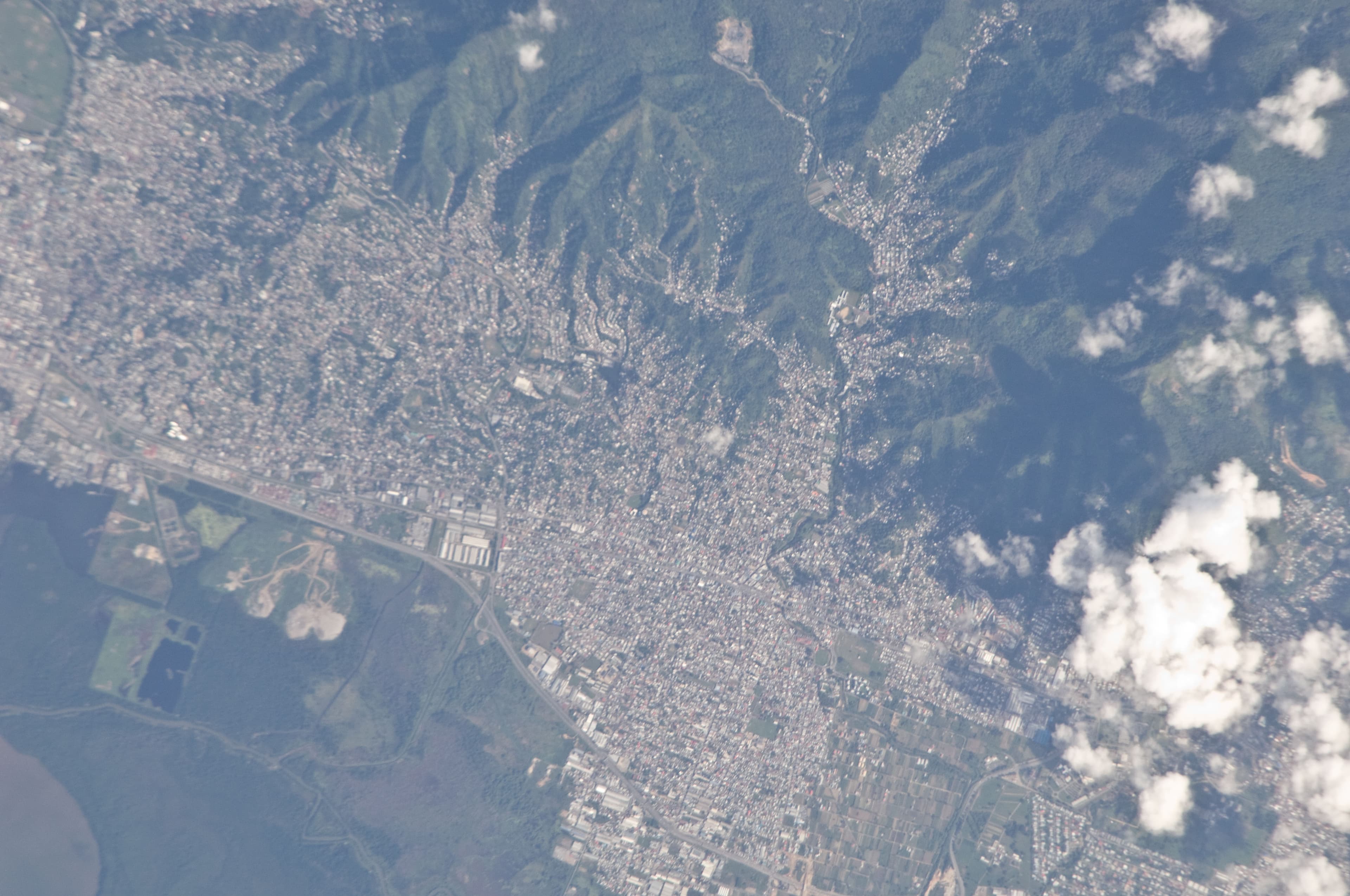
On July 4, 2011, the National Infrastructure Development Company - NIDCO - executed a Design-Build contract with Brazilian firm Construtora OAS for the Sir Solomon Hochoy Highway Extension to Point Fortin. The contract value was TT$5,213,893,000. The project would connect San Fernando to Point Fortin along 47 kilometres of new highway, linking Debe, Penal, Siparia, Fyzabad, Mon Desir, and La Brea to the national road network. It was, at the time, the single largest contract ever entered into by the state of Trinidad and Tobago.
Nearly fifteen years later, the highway is substantially open but not fully complete. The final segment between Vance River and Guapo remains unfinished. The Mosquito Creek section, which collapsed in January 2022, was given a March 2026 deadline for remedial works. That deadline has now passed. Whether it was met has not been publicly confirmed, which - in the context of infrastructure projects in Trinidad and Tobago - typically signals that it was not.
The estimated cost to complete the highway has exceeded $8 billion, well beyond the original $5.2 billion contract. Adding the $466 million spent on land acquisition alone, the project has consumed public resources on a scale that warrants careful accounting. At the current exchange rate, the project has cost well over US$1 billion. For a country with a $59.2 billion national budget, this single road project represents a remarkable concentration of public spending.
How It Got Here
The story of the highway extension is not simply one of a road that took too long to build. It is a case study in how institutional decisions compound over time to produce outcomes that no single actor would have chosen.
The bidding process was initiated by a PNM Government in early 2010. NIDCO invited tenders on February 26, 2010, and submissions closed on May 7 that year. Only three bids were received. The lowest came in at TT$5.2 billion. The highest was TT$6.3 billion. Both were significantly above the engineer's estimate of TT$3.6 billion. The PNM did not award the contract before the May 24, 2010 general election. The incoming UNC-led People's Partnership Government, through NIDCO, awarded the contract to OAS on March 4, 2011.
By March 2015, OAS had filed for judicial reorganisation in Brazil - the equivalent of insolvency proceedings. Under the contract's Clause 15.2(e), this should have triggered NIDCO's right to terminate. It did not. On September 4, 2015 - 72 hours before the general election - the outgoing UNC government executed Contract Addendum No. 2, waiving NIDCO's right to terminate the bankrupt contractor. PM Rowley later stated this was done "against the advice of NIDCO's consultants." The addendum also increased the advance payment from the standard 10 percent to 20 percent - TT$856 million instead of TT$428 million. The addendum effectively removed the insolvency termination clause, allowing OAS to remain on the project with a reduced scope of works and the introduction of nominated subcontractors. Rowley separately alleged that a meeting took place in South Africa between OAS executives and a UNC minister during the 2010 World Cup, though this claim has not been independently verified.
This decision would prove extraordinarily expensive. When NIDCO eventually terminated OAS's contract, arbitrators at the London Court of International Arbitration ordered US$126.3 million - approximately TT$852 million - in compensation to OAS, ruling that NIDCO had been wrong to terminate. The High Court later set aside the award, finding errors on the face of the ruling. OAS appealed in May 2025, and the matter remains before the courts. The outcome could add close to TT$1 billion to the project's already staggering cost.
Parliament itself has described the sequence in blunt terms. Government Member Lisa Morris-Julian called the events surrounding the project "a conspiracy to defraud the country." The Parliament's Joint Select Committee on Land and Physical Infrastructure began a formal inquiry in March 2024 into the 2023 NIDCO report entitled "The Saga of the Sir Solomon Hochoy Highway Extension to Point Fortin Project" - a title whose candour is unusual for an official document.
The Mosquito Creek Problem
In January 2022, a section of the highway under construction at Mosquito Creek collapsed. The northbound lanes gave way. NIDCO commissioned two independent geotechnical investigations, which attributed the failure to lower-than-expected consolidation of the underlying subsoils compared to what the original design had assumed.
NIDCO launched remedial works that included the installation of a continuous flight auger piled wall driven 20 metres into the subsoil, along with the use of lightweight materials - pumice fill and Geofoam polystyrene - to reduce loading on the ground beneath. The original seawall at Mosquito Creek was demolished and fully reconstructed.
In September 2025, NIDCO confirmed remedial works were progressing rapidly and set a March 2026 completion target. As of March 31, 2026, no public announcement has confirmed whether that target was met. The Ministry of Works and Transport has not issued a statement. NIDCO has not updated its project page. The silence itself is informative.
The Broader Pattern
The highway extension is not an isolated case. It is the most expensive example of a pattern that repeats across infrastructure projects managed by NIDCO and the Ministry of Works.
The Macoya Interchange on the Churchill Roosevelt Highway had $20 million allocated for design. Years after the initial announcement, the project remains in the design phase. Tenders for design and traffic studies were issued, but the interchange itself - the physical infrastructure that would ease congestion on one of the country's most heavily used corridors - has not been built. A design study is not infrastructure. It is a plan for infrastructure.
The Programme for Upgrading Roads Efficiency - PURE - has managed the widening of the Sir Solomon Hochoy Highway between Chaguanas and Chase Village, a $65 million project. It was supposed to be completed before the end of 2024. Weather was blamed for delays. The Ministry said it was 70 percent complete by January 2025 and rescheduled completion for March 2025. Whether that date held is unclear.
The Churchill Roosevelt Highway Extension to Sangre Grande involves a 14-kilometre first phase from Cumuto Junction to Toco Main Road. It is a separate project from the Solomon Hochoy extension, but it follows the same institutional pathway - through NIDCO, through the Ministry, through the same procurement and oversight structures that have repeatedly produced delays and cost escalation.
The Accountability Deficit
What makes the highway extension story particularly instructive is not the size of the overruns, though those are significant. It is the absence of a system for tracking them.
NIDCO does not publish project-by-project accounting in a form that allows the public to compare original budgets against actual spending, original timelines against actual delivery, and scope changes that accumulated during construction. The Ministry of Works Budget Guide for 2026 contains forward-looking allocations, not retrospective accounting. A Trinbagonian searching for a single document that tracks what the highway extension was supposed to cost, what it actually cost, who was paid, what was delivered, and when - will not find one.
The $466 million in land acquisition costs is a revealing detail. During the project, the highway's alignment was changed, leaving NIDCO holding over 100 properties that had been purchased with public funds but were no longer required for construction. The state paid millions for land it did not need. Whether those properties have been disposed of, and at what value, is a question that has not been publicly answered.
The OAS arbitration adds another layer. If the appeal succeeds and the original US$126.3 million award is restored, Trinbagonian taxpayers will be paying nearly TT$1 billion to a contractor that went insolvent while building the road - for the right to have terminated the contract. If the appeal fails, the legal costs themselves represent a significant expenditure. Either way, public money is flowing away from road construction and toward lawyers and arbitrators.
What Comes Next
The highway extension, despite everything, has delivered real value. Most of the 47-kilometre route between San Fernando and Point Fortin is now open to traffic. The energy sector installations on the south-west peninsula are more accessible. The towns along the route are better connected. The economic case for the road was always sound. The question was never whether the road should be built. It was whether $8 billion and fifteen years was an acceptable cost for building it.
The answer depends on what comparison you use. There is no published benchmark for highway construction costs in the Caribbean that would allow Trinbagonians to assess whether their highway extension was priced fairly relative to similar projects in Jamaica, Guyana, or Barbados. There is no published schedule performance index that would indicate how far behind the project fell relative to its baseline timeline. These are standard project management metrics. Their absence is not an oversight. It is a choice.
The Mosquito Creek remedial works will either be completed or they will not. The OAS arbitration will either cost the state close to TT$1 billion or it will not. The Macoya Interchange will either be built or it will remain a design study. None of these outcomes are unpredictable. All of them are trackable.
A comprehensive, publicly accessible accounting of infrastructure project performance across all NIDCO projects - comparing original budgets to final costs, original timelines to actual delivery, scope changes, and the reasons for each deviation - is not only possible. It is the minimum standard of transparency that a project of this scale demands.
The road from San Fernando to Point Fortin is, at long last, mostly built. The road from spending to accountability remains under construction.
Sources
- Parliament of Trinidad and Tobago: "The Saga of the Sir Solomon Hochoy Highway Extension to Point Fortin Project" (NIDCO Report, 2023)
- Trinidad Express: "March 2026 deadline for Mosquito Creek work" (September 2025)
- Trinidad Express: "$7b Pt Fortin Highway a 'conspiracy to defraud'" (June 2024)
- TV6: "$466M spent on land acquisition for highway extension" (April 2024)
- Trinidad Guardian: "NIDCO's decision to cancel OAS highway contract to cost T&T near $1 billion"
- Trinidad and Tobago Newsday: "Appeal Court hears OAS appeal on $850m arbitration ruling on highway extension" (May 2025)
- Trinidad and Tobago Newsday: "JSC begins Solomon Hochoy Highway extension inquiry" (March 2024)
- CNC3: "Highway project delayed, but no cost overruns"
- CNC3: "Multi-million dollar interchange for Macoya on track"
- CNC3: "At long last, highway to Point Fortin opens"
- Trinidad Guardian: "Sinanan: Blame the rain for highway project not finishing by end of 2024"
- Office of the Prime Minister: "Prime Minister's Statement in Parliament on Construtora OAS Ltd" (June 2022)
- Oxford Business Group: "Trinidad and Tobago's highway project reaches halfway mark"
- Ministry of Works and Transport: Solomon Hochoy Highway Extension project page
- T&T Parliament: Ministry of Works Budget Guide 2026
- High Court of Justice of Trinidad and Tobago: Constructora OAS Ltd v NIDCO (CV2022-01832, December 2022)